
One measurement tells you more about your electricity bill than any other, and almost nobody guesses it correctly. Most households assume fifty watts and find three hundred.
6 min read · 1,352 words · Reviewed November 2026
Energy
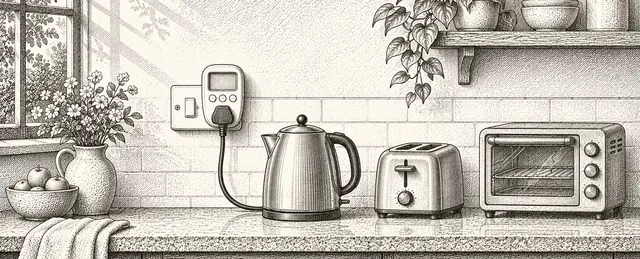
Most people’s mental ranking is wrong. The lights get blamed, the dryer gets defended, and the real biggest consumer sits quietly in a cupboard.
6 min read · 1,308 words · Reviewed July 2026
Energy
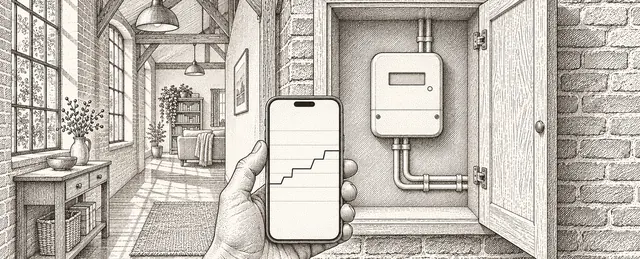
Almost every household has one and almost nobody uses it. The useful data is a local broadcast every few seconds, not the monthly bar chart in an app.
6 min read · 1,359 words · Reviewed October 2026
Energy

A lot of money gets spent on the wrong resolution. The three tiers answer different questions, and knowing which question you have is the whole decision.
6 min read · 1,422 words · Reviewed June 2026
Energy

Reduce the demand before you optimise the supply. Every step on the fabric makes every later step cheaper and smaller.
6 min read · 1,431 words · Reviewed July 2026
Energy
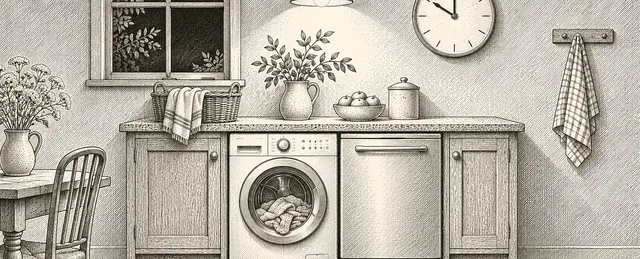
The deciding question is not how much you could save but how much of your consumption you can move. Without a car, a battery or electric hot water, be sceptical.
6 min read · 1,370 words · Reviewed June 2026
Energy
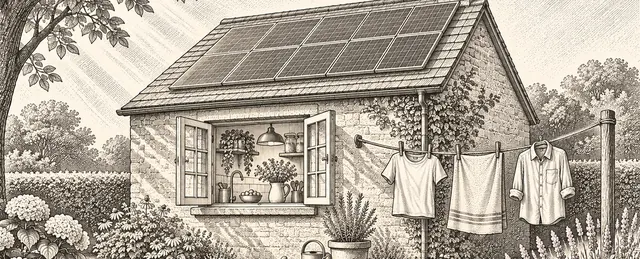
The confusion is rarely about how panels work. It is about what happens to the electricity you generate and do not use, because that determines almost all of the economics.
6 min read · 1,357 words · Reviewed November 2026
Energy

Four numbers decide it, and three of them you can measure rather than estimate. The most common expensive mistake is buying too much capacity.
6 min read · 1,384 words · Reviewed October 2026
Energy

The largest flexible load most households will ever own. Done well it is cheaper per kilometre than anything else; done badly it trips fuses and costs peak-rate money.
7 min read · 1,485 words · Reviewed June 2026
Energy
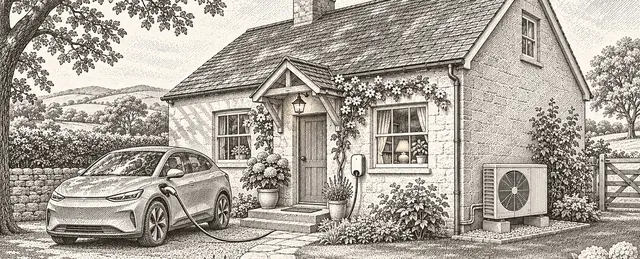
Total energy costs frequently fall while the electricity bill doubles. The consequences go well beyond the bill, and supply capacity is the constraint nobody mentions.
6 min read · 1,375 words · Reviewed October 2026
Energy

Tip lists give no sense of order, effort or return. This is a year, arranged so each step makes the next one cheaper.
6 min read · 1,433 words · Reviewed November 2026
Energy

Interlinking matters more than anything you can buy. Here is correct placement, the optical-versus-ionisation question, why CO needs its own device, and what smart genuinely adds.
6 min read · 1,339 words · Reviewed October 2026
Safety & Security

Alarms tell you a fire has started. What determines whether it matters happens before and after that moment.
6 min read · 1,382 words · Reviewed October 2026
Safety & Security

Most burglary is opportunistic, most entry is through a door, and a lot involves no force at all. That shapes what is worth buying — and what mostly is not.
6 min read · 1,381 words · Reviewed October 2026
Safety & Security

Three arrangements, each marketed as if the others do not exist. The right one depends on what you want to happen when it goes off.
7 min read · 1,472 words · Reviewed June 2026
Safety & Security
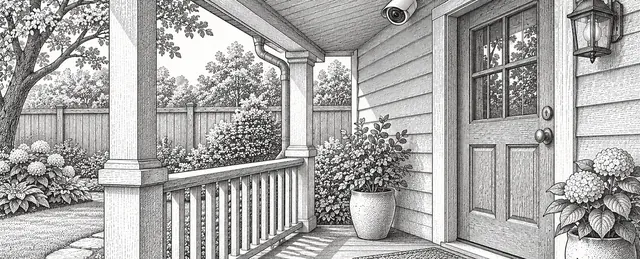
Name the question the camera answers and placement mostly follows. Then there are the placements that are never a judgement call.
6 min read · 1,308 words · Reviewed July 2026
Safety & Security

Cheap, years of battery life, almost no false readings — and half their best uses have nothing to do with security.
6 min read · 1,402 words · Reviewed July 2026
Safety & Security

The device most likely to let a stranger in is not your lock. It is an unpatched camera, a reused password or a forwarded port.
6 min read · 1,423 words · Reviewed October 2026
Safety & Security

Ask every safety device one question before buying it. Then run the unplug test, because the answers are usually more surprising than people expect.
6 min read · 1,306 words · Reviewed October 2026
Safety & Security

Theft is only one of the things that goes wrong in an empty house, and it is not the most common or the most expensive. Here is the full pass, in order.
6 min read · 1,435 words · Reviewed November 2026
Safety & Security

A monitor showing red is not useful. A monitor showing 1,400 ppm, and a person who knows what that means, is.
6 min read · 1,328 words · Reviewed October 2026
Health

Technology will not fix insomnia. It is good at removing the environmental obstacles — light, temperature, air and an inconsistent routine.
6 min read · 1,416 words · Reviewed October 2026
Health

Mould in a corner is not a hygiene failure. It is a measurement telling you that surface is below the dew point of the air in the room.
7 min read · 1,488 words · Reviewed July 2026
Health

Some popular interventions have repeatedly failed in trials. Identifying the trigger first is what makes the rest worth doing.
6 min read · 1,451 words · Reviewed November 2026
Health

A stiff neck, tired eyes and an afternoon slump are largely environmental rather than personal. The fixes are cheap and the measurement is easy.
7 min read · 1,468 words · Reviewed June 2026
Health

You adapt to both, which is why they go unaddressed for years. Neither is as hard to reduce as people assume.
6 min read · 1,458 words · Reviewed July 2026
Health

Families install cameras because cameras are what you can buy. The questions they actually have almost all have less intrusive answers.
7 min read · 1,472 words · Reviewed November 2026
Health

They cannot open a window, adjust a thermostat, or tell you the siren terrifies them. A connected home can improve their lot and also make it worse.
6 min read · 1,404 words · Reviewed July 2026
Health

A timer waters during a downpour and during a drought at the same rate. It also, in most gardens, waters too often and too shallowly.
7 min read · 1,465 words · Reviewed August 2026
Outdoor

Most gardens are over-lit and badly lit at the same time. Restraint, warm colour and shielded fittings do more than wattage.
6 min read · 1,328 words · Reviewed July 2026
Outdoor

The sensor at the end of the plot is almost never a faulty device. It is a radio problem, and radio behaves differently outdoors.
7 min read · 1,491 words · Reviewed July 2026
Outdoor

A well-sited cheap station beats an expensive one on a sunny wall. The test for every reading is whether it feeds a decision.
6 min read · 1,302 words · Reviewed October 2026
Outdoor

A lawn cut a little every day looks better than one cut hard every fortnight. The failure modes and the safety questions are both predictable.
6 min read · 1,381 words · Reviewed October 2026
Outdoor

A hot tub is often the largest electricity consumer a household adds without noticing. It also carries the most serious safety obligations in the garden.
7 min read · 1,532 words · Reviewed October 2026
Outdoor

Conditions under glass change within an hour and the consequences show within days. Ventilation is the automation that does the most work.
6 min read · 1,402 words · Reviewed November 2026
Outdoor
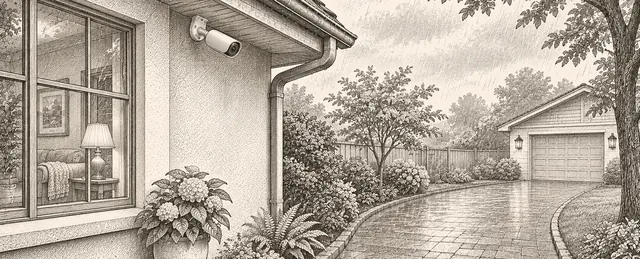
Coverage is decided by geometry, not gadgets, and a weatherproof rating means little once a cable gland has been fitted badly.
6 min read · 1,329 words · Reviewed October 2026
Outdoor

Most outdoor false alarms share three causes: sensor type, detection zone shape, and things that move without being a person.
5 min read · 1,218 words · Reviewed June 2026
Outdoor

The savings are real but come from four specific mechanisms. Judge any control by whether it delivers one of them in your house.
6 min read · 1,382 words · Reviewed September 2026
Comfort & Climate

Often the largest saving available in a family home, and usually presented as a plumbing project. It does not have to be.
6 min read · 1,452 words · Reviewed August 2026
Comfort & Climate

Slow systems punish the habits that work on radiators and a gas boiler. Whatever you asked for hours ago is what you are getting now.
6 min read · 1,397 words · Reviewed September 2026
Comfort & Climate

Every house has one. The cause is usually identifiable in an afternoon with about twenty pounds of sensors — and it is rarely the boiler.
6 min read · 1,438 words · Reviewed September 2026
Comfort & Climate

Additions are built to different rules from the rest of the house, and they behave differently. Understanding why makes them fixable.
7 min read · 1,463 words · Reviewed September 2026
Comfort & Climate

Most of a room’s comfort problems start at the window. Several cheap interventions outperform new glazing, and one common upgrade disappoints.
6 min read · 1,449 words · Reviewed July 2026
Comfort & Climate

Condensation problems often appear after energy efficiency work, not before. Once a house is sealed, ventilation has to be intentional.
6 min read · 1,316 words · Reviewed September 2026
Comfort & Climate
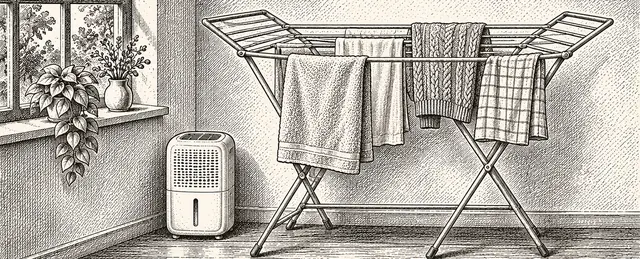
Both are bought reflexively, often for the wrong problem. Deciding correctly takes a cheap sensor and two weeks.
6 min read · 1,300 words · Reviewed September 2026
Comfort & Climate

Keep heat out during the day, purge it overnight. Most households do the exact opposite of both.
6 min read · 1,425 words · Reviewed July 2026
Comfort & Climate

Three numbers on the box explain almost every complaint about LED lighting, and hardly anyone checks the most important one.
6 min read · 1,417 words · Reviewed October 2026
Lighting

Almost every dimming problem is a mismatch between the light, the dimmer and the wiring — three things designed independently.
6 min read · 1,359 words · Reviewed June 2026
Lighting

One bright fitting in the middle of the ceiling is the cheapest way to build a house and close to the worst way to light one.
6 min read · 1,429 words · Reviewed September 2026
Lighting

The most effective way to make ordinary lighting look considered — or a shop display with visible dots, uneven colour and a dead section after two years.
6 min read · 1,427 words · Reviewed August 2026
Lighting

The automation people try first and abandon most often. The gap between irritating and invisible is configuration, not hardware.
6 min read · 1,393 words · Reviewed August 2026
Lighting

The underlying research is real and interesting. The claims attached to domestic bulbs are frequently overstated.
6 min read · 1,371 words · Reviewed October 2026
Lighting

A lot of lights go up quickly, often outdoors, often on extension leads, and get forgotten for six weeks. Here is the practical version.
7 min read · 1,487 words · Reviewed September 2026
Lighting

Lighting is touched dozens of times a day by everyone in the house, including people who did not choose it. That makes it unforgiving.
6 min read · 1,319 words · Reviewed October 2026
Lighting
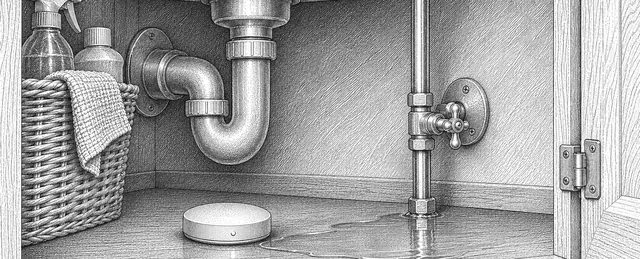
Escape of water is more frequent and more expensive than fire or theft in many markets. The water is not the problem — the delay in noticing is.
6 min read · 1,395 words · Reviewed July 2026
Water

The tool for finding a hidden leak is already installed, free to use, and almost nobody knows how to read it properly.
6 min read · 1,329 words · Reviewed October 2026
Water
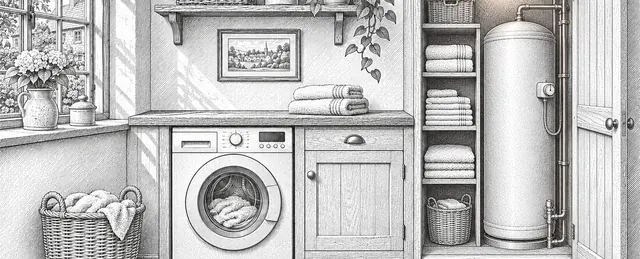
Usually the second largest energy use in a home, and the one where a genuine safety issue sits alongside the efficiency question.
6 min read · 1,430 words · Reviewed November 2026
Water

A pipe splits while frozen and stays sealed by ice. The water arrives on the thaw, often a day or two later, usually with nobody home.
6 min read · 1,412 words · Reviewed September 2026
Water

Only one domestic technology actually removes hardness. Knowing which is the difference between solving the problem and decorating it.
6 min read · 1,404 words · Reviewed June 2026
Water

Most households buying a filter have no idea what is in their water. In much of Europe the supply is already very good — which makes the useful question narrower.
6 min read · 1,414 words · Reviewed July 2026
Water

Roof plan area times rainfall times 0.8 gives litres a year, and the number surprises people. What to do with it is the harder question.
6 min read · 1,370 words · Reviewed September 2026
Water

The bacteria needs warmth, stagnation and a way to become airborne. Most homes rarely meet all three at once, but a few fittings routinely do.
5 min read · 1,234 words · Reviewed November 2026
Water
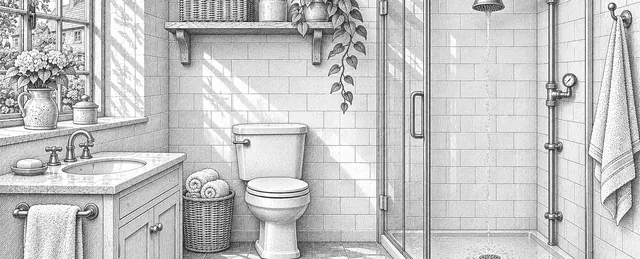
A pressure or flow reading that drifts over weeks points to scale, a failing valve or a hidden leak, well before anything visibly breaks.
5 min read · 1,199 words · Reviewed August 2026
Water
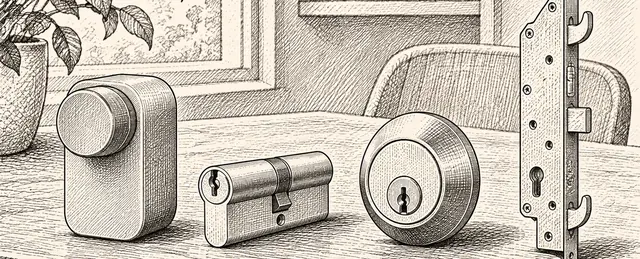
The marketing focuses on convenience. The two things that matter are whether it is physically secure and whether it opens when everything else has failed.
7 min read · 1,509 words · Reviewed October 2026
Access

The transformative part is not opening a door with a phone. It is granting access, knowing when it was used, and taking it away without changing a lock.
6 min read · 1,308 words · Reviewed August 2026
Access

The most-used device in a connected home and the one people replace soonest, almost always for reasons that were predictable in advance.
7 min read · 1,491 words · Reviewed September 2026
Access

Nearly every disappointing smart home experience traces back to this. Understanding why it is hard makes it possible to build something that works.
6 min read · 1,406 words · Reviewed August 2026
Access

Front doors get the hardware. Ground-floor windows, patio doors and side gates get neither, and they matter more than their share of attention.
6 min read · 1,452 words · Reviewed September 2026
Access
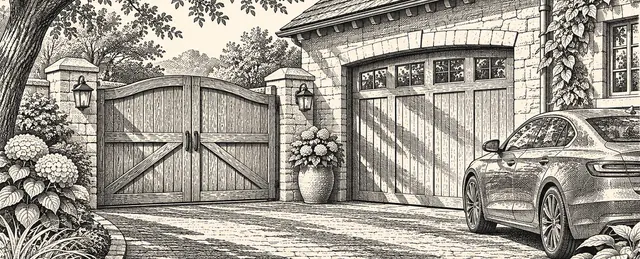
The largest moving objects in a domestic setting, and frequently the weakest point in a home’s security. Both parts deserve attention.
7 min read · 1,467 words · Reviewed November 2026
Access

Most access advice assumes a house with its own front door. In a flat the entry system belongs to the building and the best improvements are agreed rather than bought.
7 min read · 1,465 words · Reviewed September 2026
Access
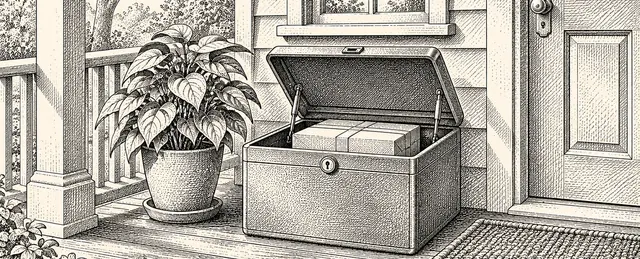
Only one of the four ways a delivery fails is really about theft, and it is the one that gets all the marketing attention.
6 min read · 1,399 words · Reviewed July 2026
Access

The cheapest way into home automation, most often bought in a four-pack and forgotten. Used deliberately they teach you more about your house than anything else.
6 min read · 1,424 words · Reviewed July 2026
Appliances Control

A washing machine lasts fifteen years and an app rarely does. That single fact should shape how much you pay for connectivity.
7 min read · 1,478 words · Reviewed November 2026
Appliances Control
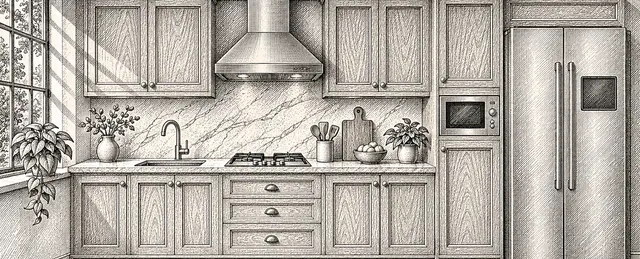
The room with the most energy use, the most moisture, the most particulates and the most fire risk — and the one where projects add gadgets instead.
6 min read · 1,421 words · Reviewed July 2026
Appliances Control

Long unattended cycles with clear start and finish points, a lot of energy and water, and a failure mode that is merely annoying. Ideal territory.
6 min read · 1,312 words · Reviewed November 2026
Appliances Control

Often the biggest standby load in a house, and the source of more household friction than anything else. Also where integration produces the most pleasant results.
6 min read · 1,415 words · Reviewed October 2026
Appliances Control

One of the few categories where connectivity is the product and the expensive models are genuinely better. Also frequently disappointing, for predictable reasons.
6 min read · 1,394 words · Reviewed August 2026
Appliances Control
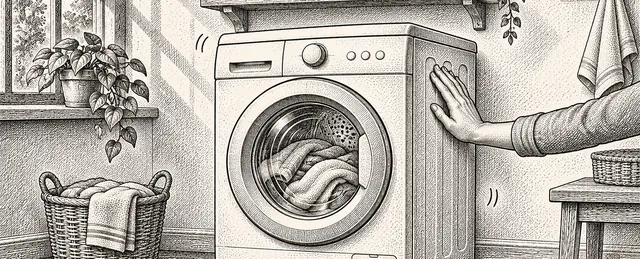
Most appliances announce their failure first — longer cycles, higher current, more frequent running. None of it is visible without measurement.
6 min read · 1,304 words · Reviewed September 2026
Appliances Control

Remote preheat and a door-open alert earn their keep quickly. Recipe guidance and inventory cameras mostly do not, yet.
6 min read · 1,282 words · Reviewed July 2026
Appliances Control
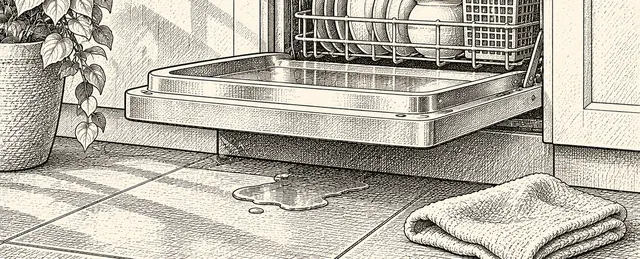
The appliances most likely to flood a kitchen are also the cheapest to monitor, if the sensor goes in the right place and the hose gets replaced on time.
5 min read · 1,181 words · Reviewed November 2026
Appliances Control

A layered shutdown that copes with the person working late, a start-up that works backwards from arrival time, and the measurement you should do before automating anything.
7 min read · 1,478 words · Reviewed October 2026
Office

Why keys stop working once a handful of people are involved, how PINs, cards and phones really compare, and the administrative process that decides whether any of it works.
6 min read · 1,352 words · Reviewed July 2026
Office

Why motion sensors get meeting rooms wrong, how no-show release actually works, and the privacy line worth drawing before you fit anything.
6 min read · 1,333 words · Reviewed July 2026
Office

Hybrid working broke the assumptions every office was designed around, and almost nobody knows their real numbers. Measuring is cheap; getting the legal part right is what makes it work.
6 min read · 1,323 words · Reviewed August 2026
Office

What carbon dioxide readings actually tell you, why meeting rooms are the worst room in any building, and how to ventilate on evidence rather than on a timer.
7 min read · 1,490 words · Reviewed August 2026
Office

The building service people complain about most and address least. Most of the fixes save money at the same time.
6 min read · 1,445 words · Reviewed June 2026
Office

Why water and fire deserve your first hundred euros, how to detect intrusion without a flood of false alarms, and the escalation path that decides whether any of it works.
7 min read · 1,538 words · Reviewed August 2026
Office

What you can fit without permission, what needs landlord consent, and the reinstatement clause that turns a cheap installation into an expensive exit.
6 min read · 1,395 words · Reviewed September 2026
Office

Why restraint beats hardware, which devices are genuinely invisible, and how to lead with the things that improve their day rather than your peace of mind.
6 min read · 1,305 words · Reviewed August 2026
Elderly Care

The conversation that has to happen before anything is installed — what monitoring genuinely costs, the five questions to agree, and where this becomes a legal matter rather than a family one.
6 min read · 1,318 words · Reviewed June 2026
Elderly Care

The most effective monitoring in a home does not watch anybody. It watches the ordinary traces of daily life, and speaks up only when they stop appearing.
6 min read · 1,443 words · Reviewed October 2026
Elderly Care
An honest comparison of wearables, radar and bed sensors — and why the cheap lighting change that prevents falls beats every technology that detects them.
6 min read · 1,343 words · Reviewed October 2026
Elderly Care

Forgetting, uncertainty, complexity and reluctance are four different problems. Buying a reminder for the wrong one is the most common mistake.
6 min read · 1,380 words · Reviewed September 2026
Elderly Care

Dim warm lighting on the bed-to-bathroom route, a bed sensor that notices someone has not returned, and the notification setting that quietly disables everything.
6 min read · 1,349 words · Reviewed August 2026
Elderly Care

Cold housing is a health issue rather than a comfort one, and the people most likely to be economising are the ones most at risk.
6 min read · 1,343 words · Reviewed October 2026
Elderly Care

Assisted living has to serve residents and staff at once. The way out is a written line between what belongs to the resident, what belongs to the building, and the narrow overlap where the care actually sits.
6 min read · 1,353 words · Reviewed August 2026
Assisted Living
Most alerting failures in care settings are not sensor failures. They are escalation failures — and the fixes are organisational rather than technical.
6 min read · 1,442 words · Reviewed July 2026
Assisted Living

A door opening at one, three and five in the morning is not a neutral event. Passive sensing answers four of the five questions a night round asks — continuously, and without the disturbance.
6 min read · 1,324 words · Reviewed October 2026
Assisted Living

The buildings where this works are not the ones with the best hardware. They are the ones where somebody owns the checklist.
6 min read · 1,326 words · Reviewed October 2026
Assisted Living

Under-heating, condensation and slow leaks share one feature — nobody tells you about them. Environmental sensing is the least intrusive monitoring there is, and the highest return.
6 min read · 1,341 words · Reviewed November 2026
Assisted Living

A question about who carries the risk, who maintains it, and what happens in five years — disguised as a technical decision.
6 min read · 1,403 words · Reviewed November 2026
Assisted Living

Thirty children and a closed door produce readings above 2,000 ppm within a double period. Here is how to measure it credibly, and why a traffic light beats automation as a first step.
6 min read · 1,345 words · Reviewed October 2026
Schools

A room where children cannot reliably hear the teacher affects every lesson taught in it. The research is unusually clear and the fixes are unusually cheap.
6 min read · 1,401 words · Reviewed September 2026
Schools

Most classrooms are lit to a standard nobody has measured. Get the level and the glare right first — automating inadequate lighting just means it is inadequate on a schedule.
6 min read · 1,312 words · Reviewed November 2026
Schools

Thirteen weeks of holidays, six-hour days, and heating schedules that depend on somebody remembering. The largest savings here are free.
6 min read · 1,420 words · Reviewed July 2026
Schools

Knowing who is in the building matters more than locks. Escape routes override every security preference. And a lockdown signal that sounds like a fire alarm is dangerous.
6 min read · 1,369 words · Reviewed October 2026
Schools

An instrumented building is a live dataset about a place students know intimately. It is also the argument that unlocks funding a facilities proposal never will.
6 min read · 1,359 words · Reviewed November 2026
Schools

The technical part is rarely the obstacle. Four audiences, two budget categories, and the difference between a request and a finding.
6 min read · 1,391 words · Reviewed September 2026
Schools

The boundary matters more than the capability. Anything touching a patient pathway is a regulated medical device; the building it happens in is a different question entirely.
6 min read · 1,333 words · Reviewed July 2026
Hospitals

The difference between compliance-grade monitoring and a consumer sensor is not a matter of taste. Here is where each belongs, and the room-level monitoring that protects both.
6 min read · 1,387 words · Reviewed October 2026
Hospitals

Continuous logging does not change the policy or the responsibilities. It changes whether the evidence exists, is complete, and can be produced on request.
6 min read · 1,333 words · Reviewed November 2026
Hospitals

The non-clinical portion of a large hospital is often the size of a sizeable office building, it is treated as an afterthought, and it can be improved without any clinical governance at all.
6 min read · 1,312 words · Reviewed November 2026
Hospitals

In a hospital, the first question about a sensor is not accuracy or protocol. It is whether it can be cleaned, and whether it obstructs cleaning something else.
6 min read · 1,366 words · Reviewed September 2026
Hospitals

Seven groups can stop an estates technology project and none is obliged to prioritise yours. Here is what each one needs, and the order that works.
6 min read · 1,375 words · Reviewed October 2026
Hospitals

Per-booking codes remove the handover, and introduce their own failure modes. Here is how to avoid the guest standing in the rain at eleven at night.
6 min read · 1,407 words · Reviewed July 2026
Hotels & Airbnb

A stranger arrives at eleven at night in an unfamiliar building. Everything has to work first time. It is the opposite of how most people build for themselves.
6 min read · 1,366 words · Reviewed September 2026
Hotels & Airbnb

The person using the energy is not the person paying for it, and they leave in three days. The strategy has to be built into the property rather than requested from the occupant.
6 min read · 1,422 words · Reviewed September 2026
Hotels & Airbnb

Compliant interlinked alarms protect the people in the building. A connected layer protects your property and your business. They are not the same thing.
6 min read · 1,403 words · Reviewed September 2026
Hotels & Airbnb

Measuring how loud a room is and recording what is said in it are entirely different things, legally and ethically. One is defensible; the other can end a listing.
6 min read · 1,368 words · Reviewed July 2026
Hotels & Airbnb

Both worries are legitimate. The answer is corroboration between two or three disclosed signals — and concealment gains you nothing while risking everything.
6 min read · 1,363 words · Reviewed June 2026
Hotels & Airbnb

Guests forgive a dated kitchen. They do not forgive a missed bathroom. This is the least visible part of a short-let operation and the easiest to improve.
6 min read · 1,448 words · Reviewed October 2026
Hotels & Airbnb

The most expensive thing that happens to a short let happens when nobody is in it. This is the least glamorous technology in hospitality and comfortably the highest return.
6 min read · 1,326 words · Reviewed July 2026
Hotels & Airbnb

The most used and least managed equipment in any block. Replacing keys is the highest-value change available to a managing agent, and the difficulty is administrative rather than technical.
6 min read · 1,354 words · Reviewed November 2026
Property Management

Switching communal lights off is the obvious approach and the wrong one. Dimming to a background level and brightening on approach saves nearly as much and generates no complaints.
6 min read · 1,441 words · Reviewed November 2026
Property Management
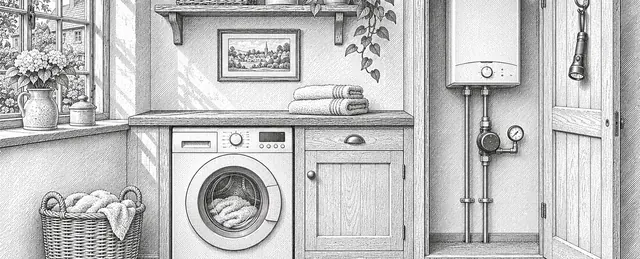
Plant rarely fails instantly. Most equipment degrades measurably for weeks first, which means the difference between an emergency and a planned repair is usually whether anyone was watching.
6 min read · 1,313 words · Reviewed July 2026
Property Management

One leak damages several homes, several policies and several residents who did not cause it. It is the best prevention-to-damage ratio in this category and chronically under-addressed.
6 min read · 1,372 words · Reviewed November 2026
Property Management
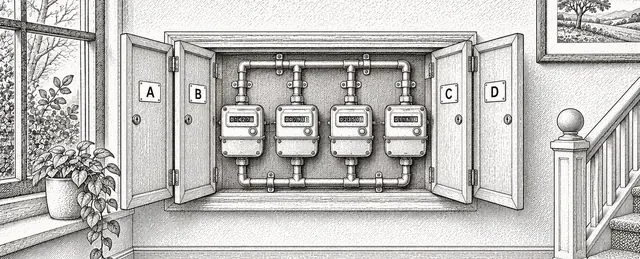
Monitoring shared consumption is straightforward. Billing individuals from it is regulated. Confusing the two is how metering projects generate opposition.
6 min read · 1,386 words · Reviewed November 2026
Property Management

The unglamorous administration that decides whether any of this still works in five years. It costs least and is skipped most.
6 min read · 1,341 words · Reviewed September 2026
Property Management
No articles match that filter.