Best Buys › Smart Locks
Smart Locks
The device that has to work when the network doesn’t — so buy for the mechanics first and the app second.
Best Buys › Smart Locks
The device that has to work when the network doesn’t — so buy for the mechanics first and the app second.
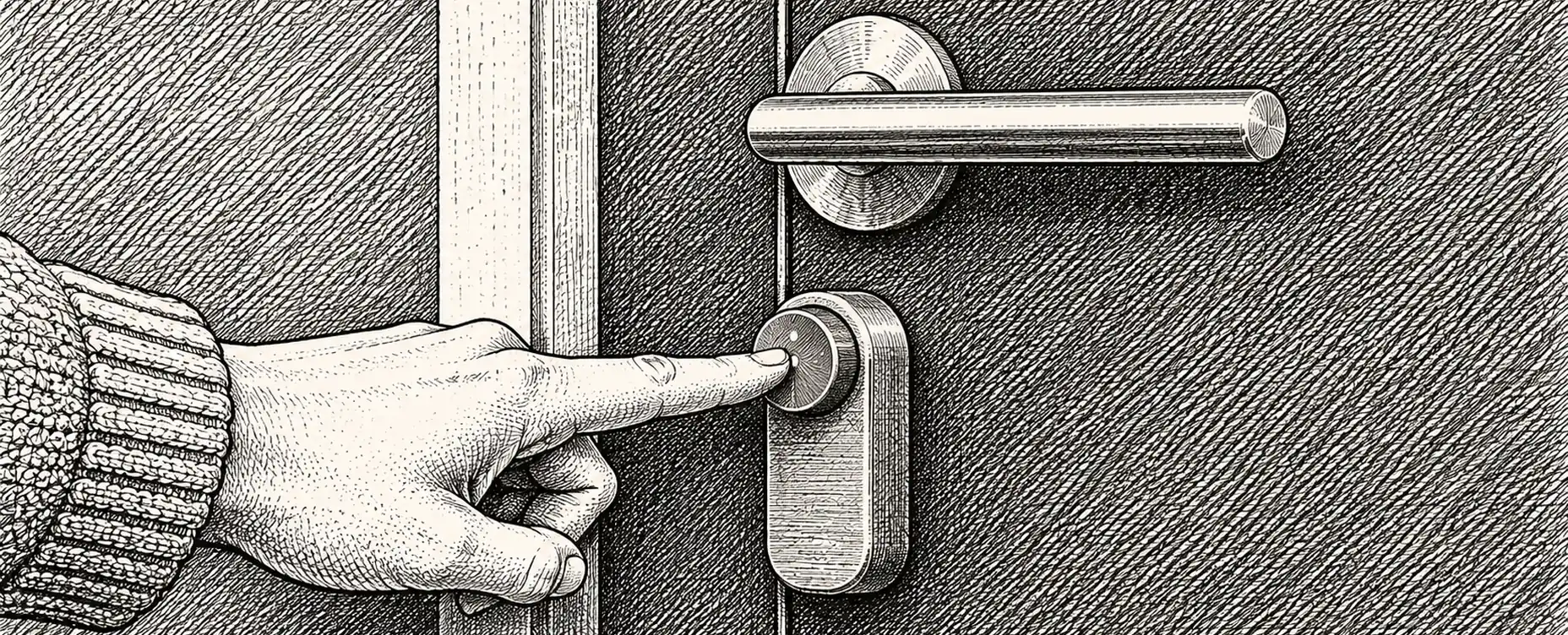
A smart lock has one job that overrides every other feature: it has to open the door when you need it to, including when the Wi-Fi is down, the app has crashed, or the battery is at 4%. Everything else — auto-lock, geofencing, guest codes — is worth having, but it is a poor trade for a lock that strands you outside because a server somewhere is unreachable.
In Europe most smart locks are retrofit motors that clamp onto your existing Euro-cylinder and turn the same key-shaped stub your physical key already turns, rather than replacing the whole lock body. That means the mechanical lock stays underneath, you keep a physical key as a fallback, and installation is a five-minute job with a screwdriver rather than a locksmith call-out. The UK and North America more often use full-body replacement locks that swap the entire cylinder and deadbolt.
The other decision that matters is local versus cloud. A lock that talks Zigbee, Z-Wave, Matter or Bluetooth to a hub you own keeps working when your internet does not. A lock that depends on the manufacturer's cloud for remote unlock still works locally at the door, but geofencing, guest access and remote unlock all stop the moment their servers do.
A retrofit motor (Nuki, Tedee, Danalock, LOQED, Aqara's U100) clamps over your existing Euro-cylinder in minutes and keeps your key working underneath. A full-body lock (Yale Linus, most US-market locks) replaces the cylinder and deadbolt entirely, needs the door prepped for it, and usually needs a locksmith if it goes wrong.
Zigbee, Z-Wave, Matter or a hub-paired Bluetooth connection lets your automation hub trigger the lock without a round trip to the manufacturer's servers. Purely app-and-cloud locks still open at the door by Bluetooth when offline, but lose remote unlock, guest codes and geofencing during an outage.
A keypad, fingerprint reader or NFC tag matters more than the app for a household with kids, guests, or a cleaner. Some locks bundle these; most sell them as a separate accessory that adds real cost.
Auto-lock on a timer is simple and reliable. Geofence-based auto-unlock is the feature people love in theory and disable in practice, because phone GPS drift causes false triggers at a door that really should not open by accident.
Retrofit motors that physically turn a cylinder draw far more current than a passive sensor, so expect 3–9 months rather than years. Confirm the lock warns well before it dies, and check whether it can still be opened by physical key when the battery is flat — it always should be.
A door that only unlocks by app or code can become a trap in an emergency if the phone is dead or the code forgotten under stress. Keep a physical key readily accessible, and check local fire regulations before smart-locking an only escape route.
| Brand | Model | Type | Protocol | Battery life | Indicative price |
|---|---|---|---|---|---|
| Nuki | Smart Lock Pro (4th Gen) | Euro-cylinder retrofit | Matter over Wi-Fi / Bluetooth | ~6 months | €219 |
| Tedee | Tedee Pro | Euro-cylinder retrofit | Bluetooth + bridge | ~9 months | €219 |
| Aqara | Smart Lock U100 | Euro-cylinder retrofit | Matter over Bluetooth/Thread | ~6 months | €150 |
| Danalock | V3 | Euro-cylinder retrofit | Z-Wave / Bluetooth | ~6 months | €180 |
| LOQED | Touch Smart Lock | Euro-cylinder retrofit, built-in keypad | Wi-Fi / Bluetooth Thread | ~12 months | €270 |
| Yale | Linus L2 | Full-body replacement | Matter over Wi-Fi / Bluetooth | ~6 months | €200 |
| SwitchBot | Lock Pro | Euro-cylinder retrofit | Matter over Bluetooth | ~5 months | €130 |
Prices move constantly and vary by country, so we give an indicative band rather than a figure that would be stale within a month. Check the brand's own store for the current price.
The default recommendation for European Euro-cylinder doors, and for good reason: Nuki has iterated this product for a decade, and the mechanics are the most refined in the category. It clamps over the existing thumb-turn, keeps the physical key working, and the Pro adds a built-in Wi-Fi bridge so it doesn't need Nuki's separate Bridge accessory for remote access.
Matter support means it pairs directly with Apple Home, Google Home, Alexa or a Matter-capable hub without going through Nuki's own cloud for local commands. The company has also been unusually transparent about local API access for people who want to script around it.
Tedee's selling point is battery life: the Pro claims roughly double the cycles of most retrofit motors on a comparable battery, which in practice means fewer nights spent worrying whether the lock will make it to morning. The body is also notably compact, sitting flatter against the door than Nuki's or Danalock's.
The trade-off is that remote access and automation both need the separate Tedee Bridge accessory, which is an extra purchase most competitors have started building in.
Aqara undercuts Nuki and Tedee on price while still shipping Matter support, which makes it the value pick for anyone already inside Aqara's ecosystem of sensors and hubs. Fingerprint and keypad entry are available as bundled options rather than pricey add-ons.
It is a newer entrant to European retrofit locks than Nuki, so the long-term reliability track record is shorter, but early reviews are positive and Aqara's hardware quality elsewhere in this guide's other categories has generally held up.
LOQED's distinguishing feature is a built-in touch keypad on the lock body itself, so there's no separate keypad accessory to buy, mount and pair. It also ships with a physical Wi-Fi-connected "Open Sesame" style contact point that most rivals treat as an upsell.
It's the most expensive lock here, and the touch keypad's battery drain is real — expect the shortest replacement interval in this list if guest codes get heavy daily use.
Yale is one of the very few mainstream lock brands offering a genuine full-body Matter lock rather than a retrofit motor, which matters for UK and North American doors that don't use a Euro-cylinder thumb-turn. Build quality benefits from decades of Yale's core lock-making business.
Full-body replacement means professional fitting is worth budgeting for unless you're comfortable with a door lock installation, and the deadbolt option needs the door prepped to accept it.
SwitchBot's Lock Pro is the budget entry with Matter certification, aimed at people who want the category without the premium-brand price. It pairs with SwitchBot's own optional keypad and works reasonably well as a first smart lock.
The trade-off is a noisier, slower motor than Nuki or Tedee, and SwitchBot's build quality, while adequate, doesn't match the decade of refinement behind the market leaders.
A keypad-only mechanical lock (no app, no Bluetooth) solves the "forgot my key" problem for a fraction of the price and never has a battery-dies-in-winter moment. It just can't auto-lock, log entries, or issue time-limited codes. If those three features aren't the point for your household, this is the honestly better buy.
Retrofit motors need a standard Euro-cylinder with a thumb-turn on the inside face — the norm across most of continental Europe. Measure the cylinder's exterior and interior length before buying; an ill-fitting cylinder is the single most common return reason. UK and North American doors more often need a full-body replacement lock instead.
Every lock in this guide can still be opened with a physical key when the battery is flat, and all of them warn well in advance in the app and usually with an audible or LED alert on the lock itself. Never buy a lock, however convenient, that removes the physical key fallback entirely.
At the door, yes — Bluetooth range is a few metres and doesn't depend on your home network. Remote unlock from outside Bluetooth range needs either a bridge accessory, a Wi-Fi-connected version of the lock, or a Matter/Thread border router relaying the command, so check which path a given model uses before assuming remote access is included.
Yes for the lock itself, since it runs on its own battery, not mains power. What stops working is anything that depends on your home network or internet — remote unlock, notifications, and hub-based automations — until power and Wi-Fi return. Bluetooth unlock at the door keeps working.
With a retrofit motor, yes — the motor turns the same thumb-turn your key already turns, so the mechanical lock and its keys are unchanged underneath. With a full-body replacement lock, the manufacturer usually supplies new keys as a backup, and your old keys stop working.
More terms in the smart home glossary. Related questions: Which protocol is best for smart locks? How secure is a smart lock?