Best Buys › Energy Meters
Energy Meters
Whole-house consumption in real time — and the first honest step towards a smaller bill.
Best Buys › Energy Meters
Whole-house consumption in real time — and the first honest step towards a smaller bill.
A smart plug tells you what one appliance costs. An energy meter tells you what the house costs, second by second, including the things you cannot plug in: the boiler, the oven, the shower, the heat pump, the lighting circuits. It is the single most informative device you can add, because almost nobody guesses their own consumption correctly.
How you connect one depends on where you live and what your utility meter offers. In the Netherlands and Belgium, virtually every modern meter has a P1 port — a standardised serial socket that streams live readings for electricity and often gas and water too. Plug a dongle in and you are done in two minutes, with no electrical work at all. Norway and parts of Scandinavia have the equivalent HAN port. Germany typically has neither, so readers there clip over the meter’s blinking infrared LED and count pulses optically.
Where no port exists, the alternative is CT clamps — current transformers, jaws that clip around a live cable and measure the magnetic field it produces without cutting into it. These go in the consumer unit, they can measure individual circuits rather than just the total, and they are electrician territory.
Look at it before buying. A P1 socket (Netherlands, Belgium) or HAN port (Norway) means the cheapest and easiest option. A blinking LED and no port means an optical reader. Neither means CT clamps in the consumer unit.
If you have or plan solar panels, you need a bi-directional meter that separates what you import from the grid from what you export back. A meter that only reports a single total is close to useless once you generate your own power.
Most homes have one live conductor (single-phase). Many Dutch, German and Belgian homes have three, which allows higher total load. A single-phase meter on a three-phase supply will only ever see a third of your consumption, which is a common and expensive mistake.
P1, HAN and optical readers are genuinely plug-in. CT clamps and DIN-rail meters go inside the consumer unit alongside live busbars and are not a DIY job in most jurisdictions.
Some meters report straight onto your network. Others send readings to the manufacturer’s servers and hand them back to you, which means an internet outage takes your energy data with it. For something you want to automate against, local is markedly better.
For behaviour change, 1–2% accuracy is ample. If a reading has to be legally billable — sub-metering a tenant or a shared charge point — it must be MID-approved, which is a certification, not a spec sheet claim.
| Brand | Model | Connection | Type | Direction | Local | Indicative price |
|---|---|---|---|---|---|---|
| HomeWizard | Wi-Fi P1 Meter | Wi-Fi | P1 port | Bi-directional | Yes | €30 |
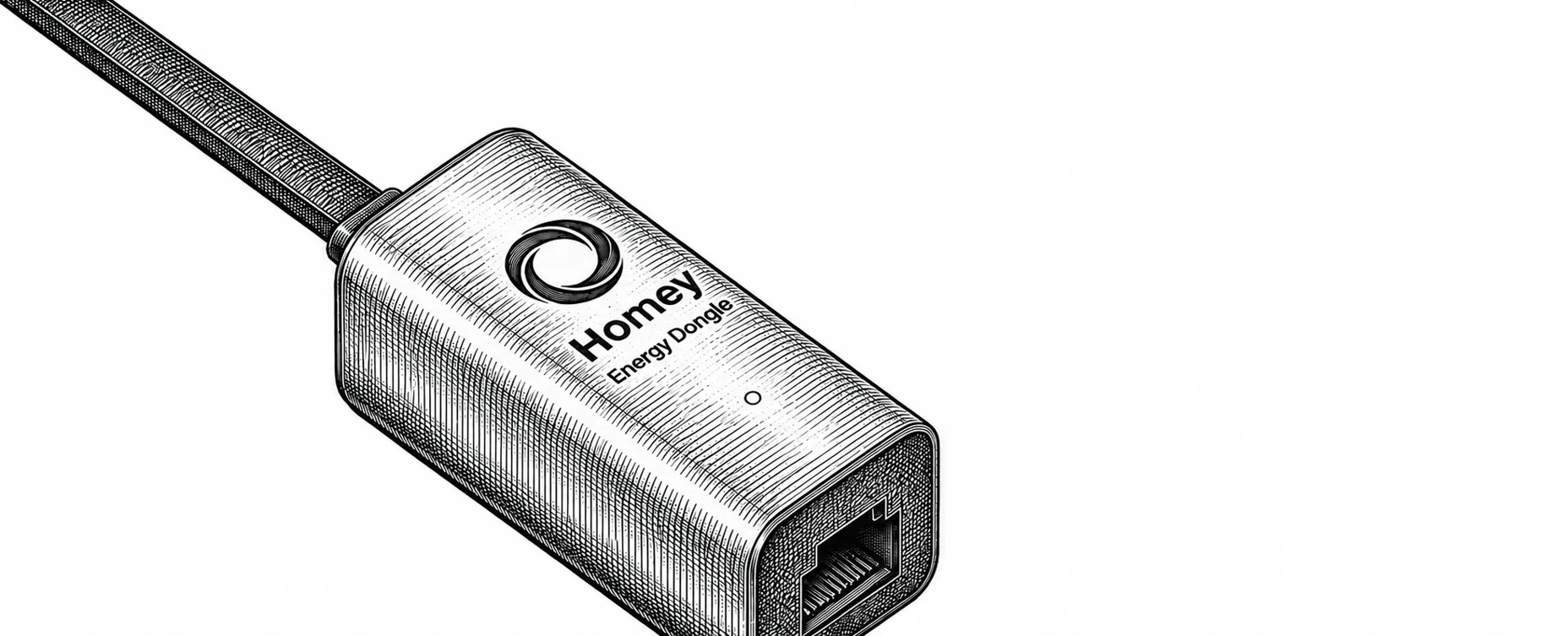
| Homey | Energy Dongle | Wi-Fi | P1 port | Bi-directional | Yes | €39 |
| energieleser | stromleser.one | Wi-Fi | Optical (LED pulse) | Bi-directional | Yes | €75 |
| frient | Electricity Meter Interface 2 | Zigbee | Optical, P1 or HAN | Bi-directional | Yes | €80 |
| Aeotec | Home Energy Meter 8 | Z-Wave | 3 × 60 A CT clamps | Bi-directional | Yes | €80 |
| IOmeter | Smart Meter | 868 MHz + Wi-Fi bridge | Optical | Bi-directional | Yes | €80 |
| Tibber | Pulse | Wi-Fi | P1, HAN, KM or CT | Bi-directional | Partly | €90 |
| Powerfox | Poweropti | Wi-Fi | Optical | Bi-directional | Cloud only | €90 |
| Emporia | Vue Energy Monitor | Wi-Fi | CT clamps, per-circuit | Bi-directional | Yes | €100 |
| Shelly | Pro 3EM | Wi-Fi, BLE, LAN | 3-phase CT, 120 or 400 A | 4-quadrant | Yes | €120 |
| Plugwise | Smile P1 | Wi-Fi or Ethernet | P1 port | Bi-directional | Yes | €120 |
| HomeWizard | 3-Phase kWh Meter | Wi-Fi | Wired, DIN rail, MID | Bi-directional | Yes | €130 |
Prices move constantly and vary by country, so we give an indicative band rather than a figure that would be stale within a month. Check the brand's own store for the current price.
If you have a P1 socket, start here. Around €30, installed in the time it takes to open the meter cupboard, and on a DSMR 5.0 meter it draws its own power from the port so there is no adapter to find a socket for. DSMR (Dutch Smart Meter Requirements) is the specification Dutch and Belgian meters are built to; version 5.0 and later can power a dongle directly.
It reads gas as well as electricity, which most CT-based systems cannot do at all. The cable is short, so if your router is far from the meter cupboard, check Wi-Fi coverage there first.
The splitter is the detail worth paying for. A P1 port is a single socket, and increasingly two devices want it — your monitoring dongle and, say, an EV charger that needs live consumption data to do load balancing. This one passes the port through rather than occupying it, which avoids an awkward choice later.
Older meters that cannot power the port are handled with the supplied USB cable. Reads gas and water where those are linked to the electricity meter.
The serious option for a three-phase house, and DIN-rail mounted so it lives neatly in the consumer unit. DIN rail is the standard metal mounting strip inside a breaker box that components clip onto.
It does 4-quadrant measurement, meaning it tracks import and export of both real power (the part that does work) and reactive power (current that sloshes back and forth without doing work, caused by motors and transformers). That is more detail than most homes need, but it is the level at which you can actually diagnose a strange bill.
The Z-Wave choice, and a good one if your network is already Z-Wave and you would rather not add another Wi-Fi client. Three non-invasive clamps mean you can either monitor three phases or split a single-phase supply across three circuits of interest. Bi-directional, so solar export is reported separately rather than confusingly netted off.
The one to choose if you want to know which circuits are responsible rather than just the total. With clamps on individual circuits you can see the difference between the kitchen and the heat pump, which is where actionable insight actually lives. One-second data resolution makes appliance-level patterns visible. It is the most invasive install here.
The compatibility pick: it handles old DSMR V2 meters as well as current V5 ones, which matters if your meter predates 2015. The Ethernet port is the real reason to choose it — meter cupboards are frequently the worst Wi-Fi spot in a house, and a cable removes the problem entirely. Which is just as well, because the Wi-Fi radio is the unit’s weak point.
A clever answer to the commonest practical problem: no Wi-Fi in the cellar. The optical head sits on the meter and talks to a bridge elsewhere in the house over 868 MHz sub-gigahertz radio, which passes through concrete far better than 2.4 GHz — up to 50 m or three floors. The bridge stores readings if your connection drops, so the history has no holes.
The flexible option: one product family covering optical pulse reading, P1 for the Benelux and HAN for Norway. Battery powered and Zigbee, so it needs no socket and no Wi-Fi at the meter. The failure mode to know about is optical mode on a meter whose LED pulse is dim or oddly timed, where readings can drift.
Easy to fit and well made, but be clear about the architecture: readings travel to Powerfox’s servers and come back to you from there. An internet outage or a service problem takes your energy data with it. For a device whose whole job is feeding automations and dashboards, that is a meaningful weakness compared with the local alternatives above.
Good hardware with a commercial string attached. The reader itself works broadly, but the features people buy it for — cost conversion, hourly tariff awareness, peak-usage tracking — require a Tibber electricity contract. If you are a Tibber customer it is an obvious choice; if not, the money is better spent elsewhere.
Monitoring on its own changes very little. Three things make it pay.
Find the standing load. Look at consumption at 3am, when nothing should be running. Most houses discover 150–400 W of permanent draw they cannot account for. Chasing that down with a rotating metering plug is the cheapest saving available.
Shift load to cheap hours. If you are on a dynamic tariff, live consumption plus hourly prices lets you run the dishwasher, charge the car and heat water when electricity is cheapest — occasionally at a negative price, when you are effectively paid to consume.
Feed load balancing. An EV charger that can see live household consumption will throttle itself rather than tripping your main fuse when the oven and the shower come on mid-charge. This is the most valuable single use of a P1 meter, and the reason the port pass-through on some dongles matters.
P1 is a standardised serial socket found on Dutch and Belgian smart meters that streams live readings for electricity, and usually gas and water too. A dongle plugs straight in with no electrical work, which makes it by far the easiest and cheapest way to monitor a whole house. Norway and parts of Scandinavia use an equivalent called the HAN port.
A CT clamp (current transformer) is a hinged jaw that clips around a live cable and measures the magnetic field it produces, so it reads current without the cable being cut. Because it is fitted inside the consumer unit next to live busbars, installation is an electrician’s job in most countries.
If you have solar panels, or might add them, yes. A bi-directional meter reports what you draw from the grid and what you send back separately, rather than giving one net figure. Without that distinction you cannot see self-consumption, and automations that respond to solar surplus have nothing to work with.
A kilowatt (kW) is a rate — how fast you are using electricity at this instant, like the speed on a speedometer. A kilowatt-hour (kWh) is a quantity — how much you used over time, like distance travelled. Your bill is in kWh; a live monitor shows kW.
Only if the readings must be legally billable, such as sub-metering a tenant or charging someone for EV charging. MID refers to the EU Measuring Instruments Directive, and approval is a formal certification rather than a claimed accuracy. For understanding your own consumption, any meter accurate to 1–2% is entirely adequate.
More terms in the smart home glossary. Related questions: Why measure energy use at all? What is a P1 port? What is a CT clamp?